Your Home and Vitamin D – Why You Are Probably NOT Getting Enough

Your Home and Vitamin D – Why You Are Probably NOT Getting Enough

In building biology, the focus is to create a space to help the body grow and function optimally—as Nature’s laws dictate, not just function. As a building biologist and mother, I have become increasingly impressed and fascinated by the role of vitamin D in creating optimal health. 

I decided to write this article to share how we can increase your Vitamin D levels despite many of us living indoor lifestyles, essentially having to be indoors much of the time. You will see how your home or work environment can be changed to naturally raise Vitamin D levels.

Read More

FAQs about EMF Assessments

Most of the questions are about how and why EMFs (electro-magnetic fields) occur, what their dangers may be, and how a Building Biology assessment can reduce your exposure to man-made EMFs.

Here are some of the more common questions asked about EMFs. Four man-made ones, in particular.

Many of the world’s top functional doctors recognise that “EMF removal is essential for proper healing”, including Dr. Dietrich Klinghardt, Dr. Zach Bush, Dr. Dan Pompa, Dr. Ben Lynch, and Dr. Tom O’Bryan.

What is a Building Biologist?

As a certified Building Biologist, I help you plan and create better spaces that support your biological health.

I also draw on over 15 years’ experience in research and publishing to provide you with scientific knowledge, support, and the necessary tools for you to make informed-based decisions for your own home or work space.

What is an emf consultation or an assessment?

An assessment for a space can identify EMF sources and your EMF sensitivity. It provide solutions to reduce exposure.

In my consultations with you, I add a strong base of EMF knowledge as an essential toolkit that you can take with you in terms of healing recommendations, programs or protocols.

Why does an assessment take X hours?

An assessment is based on your priorities and needs, and a comprehensive EMF assessment paints a picture of the invisible electro-pollution in your space.

The Electromagnetic Spectrum is broad, and in a Building Biology assessment for a space, we are concerned with at least 4 types of EMFs and the health effects.

These are AC magnetic fields (cable lines, currents drawn by device, appliance, or motor, electrical wiring errors, stray electrical current on water pipes, cable tv lines, phone lines and other utility installations);

Radio frequency fields (wireless radiation from mobile / Bluetooth devices, wifi, cell phone towers, smart devices, 5G);

AC electric fields (circuits, power lines);

Dirty electricity (any manipulation of the electrical current by devices, appliances and lighting in your home, incl dimmer switches, televisions, laptops…)

As you can see, that is a lot to assess in any modern space!

EMFs are not really that harmful, are they? EMFs levels by devices are at “safe levels”. We’ve lived with mobile phones for so long. Etc.

The 1996 EMF safety standards that are supposed to protect people are based on the false premise that the only way that EMFs can hurt our biology is by causing overheating.

This myth is unscientific, considering the fact that publicly-available research published by the NASA in 1970,[1]the US Naval Medical Research Institute (NMRI) in 1971,[2]the US Defense Intelligence Agency (DIA) in 1976[3] and countless others show that EMFs can and do cause damage through non-thermal mechanisms.

In other words, our current safety standards are based on a false premise, and therefore do not protect anyone against the harm caused by microwave radiation.

Thousands of studies in just the last decade is proving this. This includes the $25 US NTP study has published their conclusions after running one of the most important and costly studies around cell phones and cancer ever conceived. Their initial goal: proving without the shadow of a doubt that cell phones are safe.

What they found: the opposite; rats and mice exposed to cellphone radiation have shown “Clear Evidence” of an increase in multiple tumor types— read this blog for more detail.

It is up to you to measure for and reduce the man-made EMFs in your life.

My children are already grown up and no longer babies. Is an EMF consultation or assessment still beneficial?

Children are being conceived and born exposed to artificial EMFs. Children are at greater risk from exposure to carcinogens than adults, and this risk remains well into adolescence as they develop.

One effect is on their emotional processing, executive attention, decision making, and cognitive control—these are fundamental skills required for success and emotional well-being.

There are many things we can do as parents to mitigate any harm and plan a path forward for children to learn how to live well in a digitised society.

Not least, creating a good space can help unplug our children, limit their screen time, and give them some digital detox.

What other services do you offer?

Interior design support and sourcing; Birth space / Postpartum recovery planning; Childrens’ space planning.

Facial Development: Can Your Home Affect Your Appearance?

Our environment shapes how we grow. The daily pressures and habits are extremely powerful in affecting the way we move and function. An understated aspect is how your home can affect how your child grows up looking!

The importance of environmental factors are clearly being ignored and could greatly assist the field of orthodontic therapy and general health. Professor John Mew developed an interest in the science of facial growth. Seeking alternatives to facial surgery he returned in 1965 to University College to specialise in orthodontics. Since then he has been developing non-surgical methods of correcting unattractive vertical growth in children’s faces.

In the 1970s he wrote several papers on the new sub-specialty of ‘Orthotropics’ which aims to encourage horizontal growth by changing oral posture. He has written a textbook and published many articles internationally on this subject. John has recently been described both as “a maverick” and “the brightest orthodontist who has ever lived”. It was the science and environmental factors of facial development that interested Prof. Mew to seek alternatives to facial surgery and specialise in orthodontics.

This article summaries an interview, in which he goes over some of the environmental factors that can affect the growth of your face, and hence, affect how you look, including your own home.

What kind of growth do we want for the face and head?

However, in typical treatment, orthodontists offer fixed braces or ‘train tracks’, usually accompanied with extractions and sometimes jaw surgery. The belief is it is too difficult or impossible to alter the growth of the jaws. This form of traditional treatment has been used for about 100 years and orthodontists are fully aware that it can damage the teeth and face and also that the crowding tends to return later. For example, In the UK only 5% of Orthodontists inform their patients that there are alternative methods, such as guiding the growth of the jaws ‘Orthotropics’.

You can imagine the expense that parents have to go through in order to correct their child’s teeth or jaw alignment!

Forward growth is good looking growth. It also ensures room for all of the teeth. More importantly, it prevents sleep apnea, which shortens one’s lives, according to some studies, by ten years or more.

This forward growth also creates a bigger space in the throat to breathe, particularly at night. Dr Mew explains: “When the tongue drops to the back of the throat, and you are unable to breathe for long periods at night.”

A good facial posture involves the mouth, tongue, and neck being in good position. However, this has been neglected in scientific research because it is simply not very feasible to measure posture per se. But by measuring the results, you can see how particular changes in posture can affect facial growth. Whether the result looks “good” or “bad” is also tricky to quantify, but you can assess the function of how the mouth and tongue is.

Dr Mew called his approach orthothropics. One way he sought to prove this was to treat twins; he would treat one while another orthodontist would treat the other. In every case, the twin treated by Dr Mew showed his method taking into account posture worked significantly better.

Why is posture so important for young children?

The cranial base is said to reach 87% of its growth by 2 years and 98% by 15 years of age.

Around age 5, the cranial base has completed 90% of its growth and, from then on, can be considered relatively stable as the remaining 10% of change occurs in the next 10 years.[1]

It is known that maturation of different components of the craniofacial skeleton reach their completion at different time points. It is also considered that some components of the anterior cranial base are the earliest structures in the skull to reach maturity in shape and size at about 7–8 years. This is earlier than the teen years and even early adolescence that convention suggests.

The changes in the craniofacial structure do not stop with the onset of adulthood, but continue, though at a significantly slower rate, throughout adult life. However, these changes tended to be of small magnitude compared to the tremendous changes during early childhood.

How can your home affect how you look?

Have you seen your room when a shaft of sunlight crosses a bedroom?

Allergies and blocked noses can start soon after birth. They are a response to tiny particles of dust in the air, and are becoming increasingly common in industrial countries. The most common allergy is to house dust.

Do you use air conditioning (with all closed windows) often as a matter of habit?

These habits contribute to mouth breathing. Over time, blocked noses lead to open mouth postures, which derails the optimal development of the facial structure. From the Orthotropics blog:

The genetic influence on facial development is obvious and environmental things such as thumb sucking has long been recognised. It is not often appreciated how influential the environment is and what a dramatic effect on facial shape changing this can make. (…)

Nearly all children experience at least one blocked nose in early infancy, most have complete nasal blockage for days at a time, when they are forced to lower their tongue and open their mouths to breath.

This becomes a habit during the very period that they are learning to walk and program their postural centres. This picture shows the effect of this on a child who was almost fully grown but developed a blocked nose causing his face to grow down, the effect on younger developing children is even greater.

Critical points in facial development

Around ages six and seven, the permanent teeth start to come in. A child’s appearance can be severely damaged by poor posture. This factor has been overlooked in orthodontics, which is why Dr Mew says orthotropics treat at a younger age by age seven whereas orthodontics treat patients older in teenagehood.

You can watch the interview with Dr John Mew here The interviewer asks the tough questions https://youtu.be/SVeTRz6qY18

Resources & References

[1] https://www.ncbi.nlm.nih.gov/pmc/articles/PMC8317569/pdf/i0003-3219-87-6-897.pdf

[2] Orthotropics. Information For Parents. https://orthotropics.com/information-for-parents/


Do you suffer with any throat and nose problems? Do you have sleep apnea or snoring? Do you find your home dustier than it should be? Get a free discovery call to find out how to create a home to support your child’s development.

Glamping: A Diary and Review Of What Was Great (And Not So)

Recently we did something only parents who miss the outdoors can do when they are also simultaneously dealing with (between them) back injuries and all the thrills of a third trimester pregnancy. We went glamping in the highlands.

Travelling can be tiring in itself and at the end of the day your body and mind need optimal rest because that is the basic biological needs that keep us healthy and energetic. Otherwise you would be booking yourself in for “real rest” after being worn out and done in on a holiday—not our intention!

It was both fantastic and a bag of surprises. The cool and relaxed environment of the highlands was compromised by a few design flaws.

Why people are loving glamping

Whether it is called glam camping, luxurious, posh, luxe camping, luxury boutique camping, there is a trend for an experience under canvas, which focuses on the environment, respects nature, and keeps it as high quality and as local and artisan as possible.

The aim is usually to offer a comfortable, accessible way to spend time reconnecting to nature and partake in its health benefits—without adding any stress, which can happen occasionally with traditional camping.

Where we stayed was more camp than glamp, though. Indeed, as its name (which I’m deciding to omit) suggested.

It’s been a while since we’ve stayed “on the land” with the small ones so these factors stood out during our stay.

We hope these biological factors are also helpful for you to consider and understand what makes being outdoors in nature so healing, as well as the possible detractors and discomforts in any environment that can compromise your level of rejuvenation and rest.

Before going into the factors, it might be helpful to have a sense of how the place was laid out.

The tents were located side by side and most of them faced inwards to a communal round area. The others were further up the hill. The toilets were cubicles situated together, and downward some metres away from the tents. Plastic sheeting helped keep the load of the highlands’ heavy rainfall off the tent itself and black garden netting kept the glare off. Garden patches made up the walkway up a tiered gentle slope to the tents. These factors helped us expect that the glamping site was geared towards being social (they have many groups and families), that could explain their priorities for how area is designed.

The orientation of the light sources


The camping ground is a public space regularly booked by families, so we understand the liberal use of light probably for safety reasons. However, these lights were bright! Bright LED bulbs have unnatural spikes in the blue wavelength that suppresses melatonin—the very hormone that wants to kick in at dusk for optimal rest and rejuvenation. The lighting clashes with the gentle hues of sundown, and forced a brightness over the grounds well into the night. Our tent opening faced one of these flood lights directly. It was impossible getting to sleep until Papa cleverly used the duvets as blackout curtains instead. We also used our hoodies and extra clothes as eye masks. Long sleeves and pants and socks help cover the body to keep the dark environment for the best release of melatonin.

Orientation of the fire pits


The communal spaces and offerings for a steamboat and hotpot helped set a friendly and social vibe. Perfect for a cool mountain camping! The smoke, however, wafted into the tents. No one wants to deal with smarting eyes and stuffed noses in a tent…


The toilets were lit


Similar to the point about the bright lights above… Taking a loo break at night was blinding. It took a while getting back to sleep.

Ambient noise levels


The quaint spot was marred by surrounding traffic that continued well into midnight. Do people really enjoy camping by traffic roads?


Choice of bedding


This factor may come across as a matter of comfort and lifestyle over health. However, the quality of the sheets has a direct impact on the quality of your sleep. No one is expecting a five-star style sheet and mattress combo at most campgrounds, but the rough polyester was uncomfortable and sticky to lay on in the humid weather.

Would the polyester sheets withstand mold better, I wondered, as the mattresses were directly placed on the cold humid ground.

Using strongly-fragranced washing detergent put another dampener on the fresh outdoor experience. We wanted the fresh air, and joked that we will now also remember the scent of the detergent in the tent.

Privacy


Our neighbours were very considerate and most had retired into their tents by 11pm. Still the challenge of the space meant the tents were mere metres from one another. One could hear what was going on in the next tent (and on their TVs). How can privacy in a small space be protected?

Material of the tent

This factor is a tricky one as the choices of tents suitable for families, yet suitable for a very wet and cool climate can be limited in the market. The tents are relatively new — the campsite is not more than a year old or so, however they are already growing moldy on the outside. If anyone has suggestions on tents and outdoor setups that can take our extreme humidity, it would be so useful to know.


Waste grey water disposal

Waste water flows by a rivulet on the side down to...an external drain. I can see they tried their logical best with the location of the pipe placements carrying it out to the side and down the entire one side of the site. The smell was not the best, and we weren’t sure how the waste was going.

Last thoughts: Roughing it out need not be too rough in the outdoors


To creatively think about how to sleep and rest better is something I enjoy thinking about in every new spot I travel to, whether a swanky hotel or a rustic “glamping” spot. This is especially when we bring the littles along. Because travel can be tiring, and the outdoors can be a mix of potentially great recuperation and great elemental challenges.

Thus, the experience of a glamping site was an interesting case study.

By no means do I mean this as a full review of the glamping site and experience itself. I didn’t try the cooking experience myself and I didn’t go for the spa in a bus.

But I was intrigued by how the principles of building biology apply even more in such an outdoor environment. Thus, I hope this article was helpful for you to consider when you next go camping or glamping, to make the utmost of your outdoor adventure.

Do you enjoy the outdoors? Have you gone glamping? What did you expect and not expect from the experience? I would love to know!

Creating Beauty At Home With Building Biology

Creating Beauty At Home With Building Biology

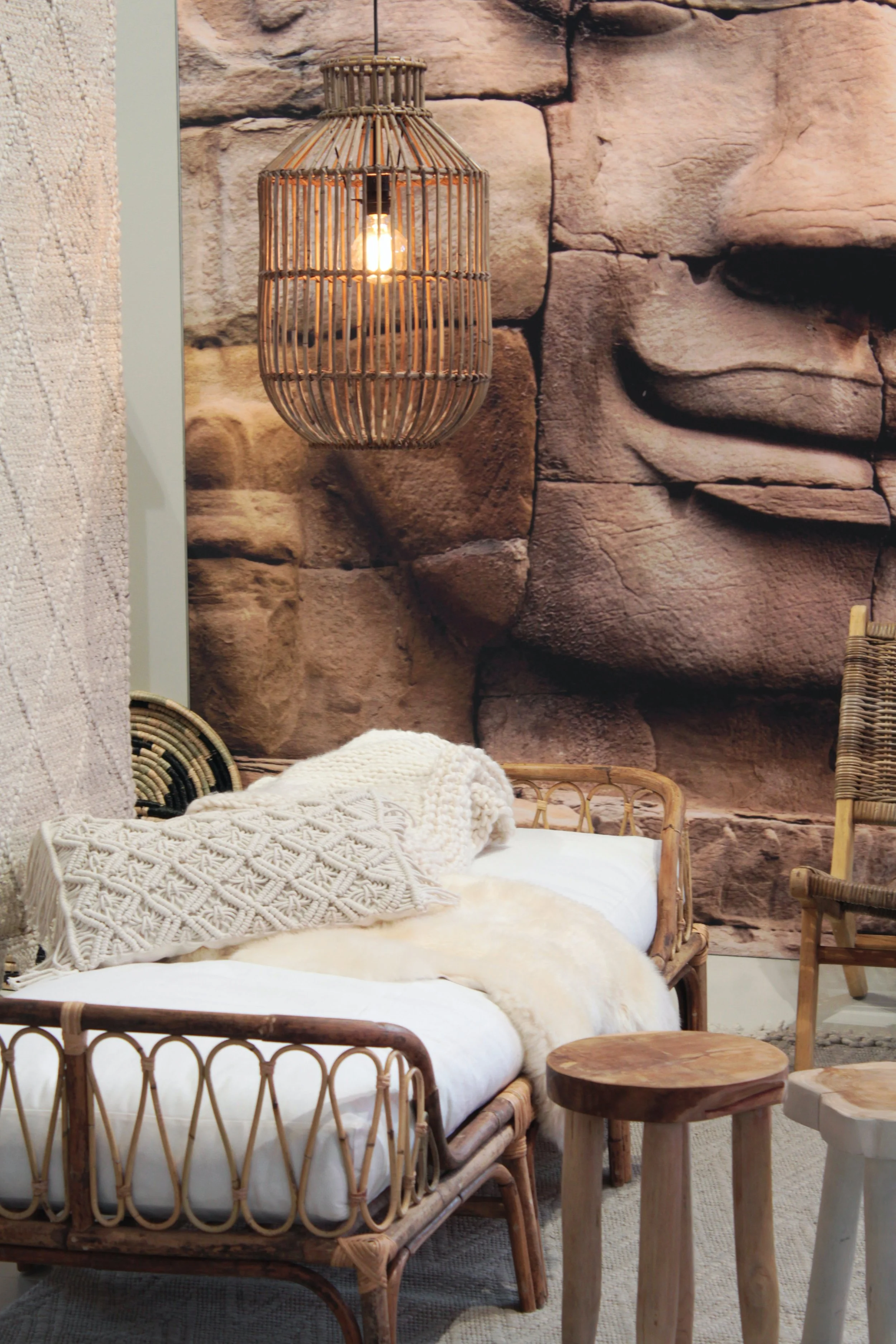
building biology is also an art as it aims for harmony between a space and its occupants. Beauty is intrinsic to our sense of wellness too. It encompasss values such as balance, harmony, and attention to the human need for these in their daily lives. When we moved to our new home in Malaysia and had to design from scratch, yet on a tight timeline and small budget, we chose purposeful pieces that would add interest, be biologically appropriate, and would continue the natural aesthetic that I enjoy. Although I still love a very bare minimalist aesthetic, it was time to finally add some beautiful touches to our space in a simple way.

Read More