Case Studies: Smartphones and Schwanommas

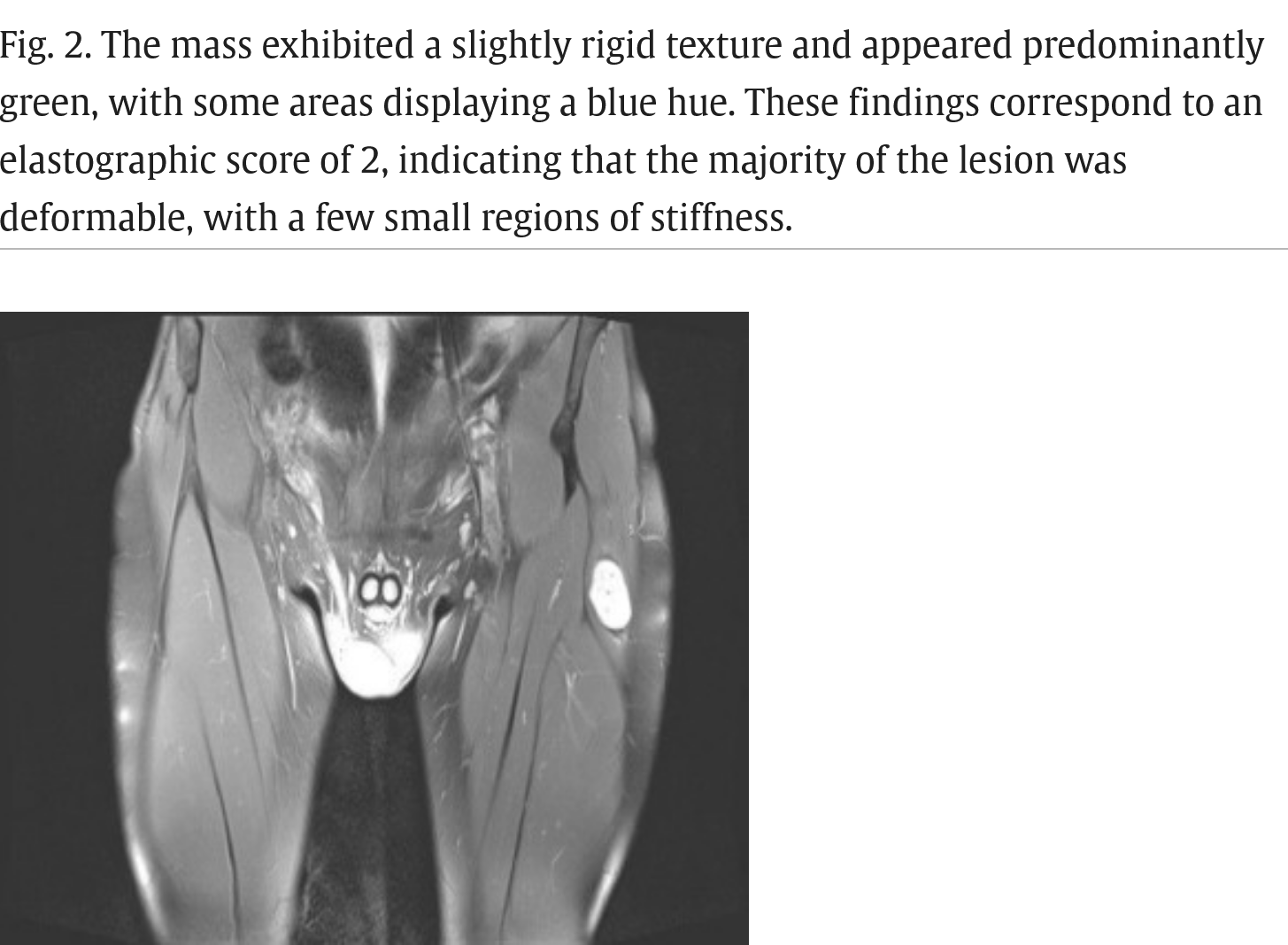
A 40-year-old Italian man had noticed the painless mass gradually expanding in his left thigh over a period of six months. Turns out it was a schwanomma cancer. It was near where he “habitually” kept his smartphone in a trouser pocket.

Three medical doctors published his diagnosis as a case report in in Radiology Case Reports, a peer-reviewed, open access journal.

This is similar to another case also in Italy.

A woman had grown a lump in her close to a pocket where she put a cell phone while doing sports for about one hour a day, every day for more than ten years.

Fiorella Belpoggi, the former scientific director of the Ramazzini Institute outside Bologna. She retired in 2019 but continues to be one of the institute’s scientific advisors. Belpoggi ran Ramazzini’s long-term RF exposure study, which found schwannoma of the heart among exposed rats.

This Ramazzini study was published in the same year as the US U.S. National Toxicology Program (NTP)’s massive 10-year study that saw malignant schwannoma of the heart among its RF–exposed rats. This is what led to the now well-known conclusion that there is “clear evidence” of cancer following RF exposure.

What are Schwannomas?

Schwanommas are extremely rare and a cancer of the nervous system.

Schwann cells form the myelin sheath that insulates nerves and helps speed the conduction of electrical impulses. They are present in most organs of the body —whether of mice, rats or humans.

They are almost always benign (noncancerous) but can sometimes be malignant (cancerous)

Dr. Robert Becker Showed the Electromagnetic Keys to Health

Robert Otto Becker (May 31, 1923 − May 14, 2008) was a U.S. orthopedic surgeon and researcher in electrophysiology / electromedicine.

His work uncovered a powerful truth: our bodies respond not only chemically but electrically—and these natural electrical processes can be profoundly disrupted by man-made electromagnetic fields (EMFs).

Dr Becker was twice nominated for the Nobel Prize for his groundbreaking work on tissue regeneration.

As a physician, he was committed to understanding the body’s natural mechanisms. Later, he turned his focus to protecting these mechanisms.

Read more on Building Biology Home on Substack.

The Complete Guide: Are You Sensitive to Electromagnetic Fields?

UPDATED 15/4/2026

  • What is Electromagnetic Sensitivity or EHS?

  • My EHS Story

  • What Causes Electromagnetic Hypersensitivity or EHS?

  • Who Is Most Electrosensitive?


What are EMFs?

EMFs, or electromagnetic fields, are invisible areas of energy. Anything that is electrically charged can generate EMFs, everything from the sun to your cell phone.

But we are talking about manmade EMFs here, often associated with aforementioned cell phone, as well as electrical power.

In my assessments, I cover four specific types of this artificial radiation.

We can also think of EMFs as low frequency and high frequency. The low-frequency EMFs come from electrical sources such as power lines, electrical wiring, and appliances such as your washing machine, air-con, and refrigerator. On the other hand, high-frequency EMFs are emitted by wireless devices, including your cell phone, iPad, and Wi-Fi router.

In this article, I focus on the symptoms of EMF sensitivity. Once we learn more about what EMFs are, their sources (ubiquitous and probably in your own hand right now), and their potential effects, we understand more about our health.

What is Electromagnetic Sensitivity or EHS?

This is the term given to people who report health issues asociated with EMFs, often to debilitating effects.

These Electromagnetic Fields (EMFs) created by devices like smartphones, WiFi routers, and home appliances in the form of wireless radiation. They may be other forms of EMFs such as magnetic and electrical fields created by other appliances and structures such as power lines.

These energy fields are invisible and can affect our health in ways we may not immediately recognise.

Symptoms of EHS

To understand By now you might be familiar with the common symptoms of EHS: headaches, fatigue, sleep disturbances, skin irritation, dizziness, and difficulty concentrating.

But aren’t these common health issues anyway?

Here is how to tell if your symptoms are related to EMFs.

1—Headaches

Our brain is a massive energy hog. Even mild thirst or when your body is dehydrated (doesn't get the fluids it needs) can cause headaches.

If your headaches are frequent and/or severe, often worsening with increased EMF exposure, they are likely related to EMFs..

2—Fatigue

If you wake up still feeling tired, you might be sensitive to EMFs, because they disrupt circadian rhythms by interfering with melatonin production and altering sleep patterns.

When you are struggling with EHS, you feel persistent tiredness that does not improve with rest.

3—Sleep Disturbances

Relatedly, you find it difficult to go to sleep, or even stay asleep. You wake at night, even though you’ve the best blackout curtains. Such difficulty falling asleep or staying asleep, often linked to the presence of electronic devices.

4—Skin Irritation

The skin is related to our gut, which is why food allergies manifest as eczema, psoriasis, etc. EMFs, too, can trigger the skin directly. Symptoms may include redness, tingling, or burning sensations on the skin.

5—Dizziness

You get a sense of sensation of lightheadedness or imbalance, particularly in environments with high EMF exposure. You might actually get dizzy to the point of fainting.

6—Difficulty Concentrating

You might have trouble focusing or maintaining attention, which can affect daily activities.

We talk about generation brain rot. But it is no coincidence that our youth are the first ones growing up in a digital era.

Gen Z grew up in a screen-saturated world. Compared to Gen Z, many Generation Alpha children (born during 2013) were given iPads around the age of 2 to 4, growing up with a tablet already in front of them.

The science is clear on how screen overuse leads to concentration problems

7—Mood Swings

It is not right to feel your emotions swing. You might feel mood swings with rapid changes in mood, including irritability or anxiety, even anger.

8—Muscle Pain

This is generalized pain or discomfort in muscles, without any other cause. You have not recently hurt yourself. You’ve not been working out too much, etc. Sometimes the pain resembles fibromyalgia.

9—Heart Palpitations

You might feel noticeable changes in heart rhythm, which may occur in high EMF areas.

10—Sensitivity to Noise

You develop a sensitivity to sounds, which you have never had before. This can be any sound, whether crowded malls or people talking normally nearby, which can exacerbate feelings of discomfort.

There are many other symptoms. These are the EHS, Electromagnetic Sensitivity, or EMF exposure are confirmed in the research below:

  • Headaches [6]

  • Lack of Appetite [1]

  • Digestion problems [2]

  • Anxiety [1,5]

  • Sleep Difficulties [1,2,3]

  • Unstable moods and Bursts of anger Due to Poor Sleep [1]

  • Depression [1]

  • Fatigue [1]

  • Lack Of Concentration [1,6]

  • Irritability [1]

  • Memory problems [1,6]

  • Visual problems- blurry vision [1,2]

  • Vertigo or Dizziness [1,2]

  • Tinnitus or Ringin In The Ears [2,3,6]

  • Abdominal Swelling [2]

  • Burning pain in hands, shoulders, legs and feet [2]

  • Itch [4]

  • Edema, swelling, bloating [2,4]

  • Chills [2]

  • Photosensitivity

  • Tachycardia [2,5]

  • Heart Palpitations [2,4,5]

  • Difficulty Breathing [2]

  • Cystitis [2]

  • Skin Rashes [1,4]

  • Heightened sensitivity to touch, smells, chemicals, light, and noise [6]

  • Weakness [6]

These symptoms can occur immediately, minutes or hours later, or over months or years.

When exposure continues, you develop a higher risk of brain and gut issues, reduced cognition, and cancer.

My EHS Story

For example, I lived with near-daily bouts of dizziness, headaches, and even migraines. When I got my first iPad, I developed heart palpitations, although I still did not put two and two together.

When I got pregnant, these symptoms magnified seemingly overnight. Some grew louder over subsequent weeks. Other symptoms emerged: extreme fatigue, difficulty concentrating, digestive issues. The doctors assured me that most pregnant women feel awful.

But my symptoms did not alleviate throughout pregnancy, nor after giving birth. They seemed to increase or decrease inexplicably. Until I connected them to my environment, especially my home and my workspace.

What Causes Electromagnetic Hypersensitivity or EHS?

These sources can be outdoors, but are more often than not found indoors in your own home.

Indoor sources:

  • Cellphones

  • Wi-Fi

  • Smart meters

  • Microwave oven

  • Alarm systems (i.e., motion-detectors)

  • LED lights, dimmers (emit unclean electricity)

  • Cordless phones

  • Washing machines

  • Electric heating located under your floors

  • Plasma TV monitors

  • Any other “Smart” appliances

  • Electric Blanket

  • Wired Clock Radio

Outdoor sources:

  • power lines

  • cellphone towers

Electric vehicles are another source of EMFs. You could argue that they an indoor source since they affect you sitting inside.

Who Is Most Electrosensitive?

Children are more susceptible to the potential effects of EMFs due to their developing bodies and brains. Their skull is thinner, their brain contains more water and fat, and their nervous system is still developing.

In fact, studies have shown that kids can absorb twice as much radiation in the head, and ten times as much in the bone marrow, compared to adults.

Children are also growing up in a wireless radiation soup. Science has shown how EMFs weaken the blood-brain barrier, alter gene expression, and interfere with hormone production.

This is why EMF awareness is crucial to secure our health today and that of future generations. This is why EMF awareness IS protection for children.

Simple strategies are:

  • limiting screen time

  • keeping wireless devices out of bedrooms

  • using wired devices whenever possible

These to help protect your children from some excess EMF exposure.

But children need protection from the environmental stress caused by invisible EMF fields. This means rethinking what’s in your home and what’s near your child 24/7. This is why I include other components of a calm safe home in an EMF-focused consultation; they go hand in hand.

On top of that, EMFs may be invisible but we can talk about it. Educate your children about the potential risks of extended electronics usage and encourage safe technology use.

Given the proliferation of digital infrastructure and the very real ways we are seeing degenerative health in digital lifestyles, I am so glad to more awareness is growing about this topic.

But we can do more and change the one place that we spend our lives and create most of our core memories with—the home.

Building Biology Home: Creating the Home to Protect Our Families
If you are serious about raising healthier kids in a wireless world, you are in the right place.

If you want to learn more about EMFs and building biology principles to create a calm home, subscribe to my newsletter. I share how to create a calm with practical truth, not fear.

Get started now with my EMF Bootcamp to eliminate, once and for all, the most common toxin in your space. In this bootcamp, you will understand the importance, types of EMFs, and effective strategies for your defense against EMF exposure.

Do you want an EMF-safe home? Work with me.


References and resources about EHS symptoms:

[1] Gómez-Perretta cell radiation exposure stud
[2] Piras et.al. Fibromyalgia and EHS Study 
[3] Bhat, Kumar Gupta Study of the Effects of Radiations Study of the Effects of Radiations  
[4] Johannson Immune system and electromagnetic fields study             
[5] Magda Havas Wireless Radiation and Autotomic system study 
[6] Gunnar Heuser Functional MRI and EHS Study


What You Still Don’t Know about the $25 Million US National Toxicology Program Study

In 2024, the National Toxicology Program (NTP) announced it had no plans to further study the effects of cellphone radiofrequency radiation (RFR) on human health.

They wanted to find out the US if exposure to radiation from 3G phones can cause the development of malignant cancers. They studied this in lab rats.

Finally, on November 1, 2018, they published their report.

In case you have not read this landmark study, here is a summary of what researchers found:

  • 6% of the male rats exposed to the highest dose of cell phone radiation developed malignant schwannomas in the heart, while 2 to 3% developed gliomas in the brain.

Researchers conclusion? “Clear evidence” of cancer and DNA damage from wireless radiation.

—The NTP study took about 10 years to complete in 2018.

Did you know it had taken that long? It started out studying the existing wireless technology used in phones (3G). But the time the study had ended, industry and consumers were moving on to 4G.

—Some did not believe that wireless radiation could cause cancer.

The study had massive detractors. Was such a study was even worth the while?

“The NTP has now shown what no one believed was possible before the project started. The assumption has always been that RF radiation could not cause cancer,” he said, “Now we know that was wrong.”—Ron Melnick told Microwave News.

—The study conclusions would have meant updating FCC’s outdated 1996 standards.

NTP researchers communicated the initial findings to the relevant regulatory agencies, including the FDA and the Federal Communications Commission (FCC), which sets the legal limits for wireless radiation. They had not updated its guidelines since 1996. That’s when we were still using 2G.

But they were not interested to update their guidelines.

—The NTP study sounded the alarm on Schwannomas.

Schwannomas cancer were extremely rare.

Schwannomas are basically what makes your cell’s myelin sheath. It insulates nerve fibers and speed the conduction of electrical impulses.

But it so happened that these same malignant tumors of the heart were also found in another large cell phone rat study published that same year in 2018.

This latter study was carried out at the Ramazzini Institute in Bologna, Italy.

—Researchers decided to publish a follow-up study, or what they excluded from the first study.

Researchers had also found that RFR exposure was associated with an increase in DNA damage. They evaluated DNA damage in three regions of the brain, the liver, and in blood cells in rats and mice. These findings were removed at an earlier timepoint from the ongoing 2-year toxicology study.

They published this second article in October 2019.

DNA damage, if not repaired, can potentially lead to tumors.

This work was included in NTP’s published Technical Reports, but this study includes analyses of the data in the supporting information not included in the Technical Reports.

—Researchers wanted more detailed studies.

The goal of subsequent studies is smaller “mechanistic” studies to understand biological changes related to RFR that could be causing cancer.

—FCC have not explained their current guidelines either.

This is related.

Because at the time, the FCC hasn’t complied with a court-ordered mandate to explain how the agency determined that its current guidelines adequately protect humans and the environment against the harmful effects of exposure to wireless radiation.

—This was government-funded.

It begs the question. Why does it fall to the government to prove harm or no harm? the biological effects of the telecommunication industry’s products.

“[Research] is what the industry should be doing on their dime and using their expertise and their predictions as to where the technology is going.”—Dr Bucher

—Bureaucracy stalled research findings.

FDA to study RFR “because they’re the agency charged with making recommendations to the FCC with respect to the biological aspects of the need for regulation.”

This is in the USA. But similar bureaucratic challenges exist in every government.

—The NTP eventually shut down the studies.

You would have thought they’d be motivated to find out more. After all, EMF exposure are increasingly exponentially and the effects are profound.

No.

In January 2024, the National Toxicology Program (NTP) announced it had no plans to further study the effects of cellphone radiofrequency radiation (RFR) on human health — even though the program’s own $30 million study, which took about 10 years to complete in 2018, found “clear evidence” of cancer and DNA damage.

This article interviews Dr Bucher, a former senior scientist in the National Institute of Environmental Health Sciences (NIEHS) NTP division.

“By the time we would come out with the next generation of studies’ industry would be on to something else. “The government has always been way behind the technologies that are being developed in the telecommunications industries.”—Dr Bucher

—The NTP study reveals how difficult it can be to conduct such studies.

Studying wireless radiation’s biological effects is no small feat.

EMFs as a phenomenon is completely differently from say, drug or environmental chemicals.

NTP scientists had to work with toxicologists, statisticians, geneticists, pathologists, and animal care staff, etc. They also had to work with electrical engineers and experts in wireless radiation to design and build the exposure systems and monitor the exposures used in these studies.

—The final report is redacted.

The National Institutes of Health (NIH) refuses to reveal nearly 2,500 pages of records related to the National Toxicology Program’s (NTP) decision to shut down its research on how wireless radiation affects human health.


Resources and References:

  • NTP’s first paper published on the website. https://ntp.niehs.nih.gov/research/topics/cellphones

  • NTP’s second paper evaluated DNA damage in three regions of the brain: Smith-Roe, S.L., Wyde, M.E., Stout, M.D., Winters, J.W., Hobbs, C.A., Shepard, K.G., Green, A.S., Kissling, G.E., Shockley, K.R., Tice, R.R., Bucher, J.R. and Witt, K.L. (2020), Evaluation of the genotoxicity of cell phone radiofrequency radiation in male and female rats and mice following subchronic exposure. Environ Mol Mutagen, 61: 276-290. https://doi.org/10.1002/em.22343