The Building Biology Guide to Gifts For Children

If you are a parent, navigating the latest shiny toys vying for your attention, sleuthing behind the marketing, and understanding what’s truly best for your growing child can be daunting. 

Choose presents that consider the whole and healthy development of your child. Why? For one thing, it helps you make a wish list that will ensure you’re supplying your kids, and filling your space, with things you actually want.

After all, the statistics are not looking good for an increasingly digital, indoor generation.

The gifting season also marks a time of new beginnings. Choosing gifts offers a great opportunity to reflect on your lifestyle and living spaces and to support your children’s natural development.

Read on for building biology tips how to choose presents that support biological development, focusing on the younger age groups 0-3 years old. 

When you’re buying a gift…

Avoid Any devices with a Screen 

Children’s brains are at critical developmental stages, especially under three. Any time spent on a screen impairs the neuronal installation process. There is a big body of research already linking screen time to under developed brains such as the all-important pre frontal cortex necessary for executive function (the part that tells you what’s best to do and how to plan ahead).

The American Paediatric Association recommends zero screen time for children under two. 

Do your family and friends a favour, and just avoid giving screen-based gifts. 

Avoid Any devices with only Wireless Connection 

Radio frequency radiation is particularly linked to brain and gut issues, which are at critical stages of development in children.

Children are incredibly sensitive to artificial electromagnetic fields due to their small body weight and thinner skulls. Any device in their hands or near them should be hard wired. Skip over those toys, tablets, speakers, and radios that are Bluetooth only. 

Avoid Any item that has known toxins 

Check painted cups and toys for lead. Overly plush polyester toys that contribute to estrogenic dust in your child’s bedroom. 

Now that we’ve gotten those out of the way, explore these options:

Wooden educational toys

More than an aesthetic favourite. Non toxic and natural materials offer a lush and safe sensory experience.

Things made from nature, instead of say plastic, also have an inherent vitality that our body can sense. 

High quality toys from natural materials will be valued and loved, possibly earning a permanent place in your home!

Click here to learn more about natural materials for children. 

  • Bauspiel — another great example, crafted from native beeches and alder. 

  • PlanToys — designed to mix and match

Blocks give endless open-ended play  

Wooden building blocks are a classic and aesthetic gift that is essential for any child. Blocks allow open ended play, so that children can explore freely. 

Support your child’s independence with Montessori objects

Children love exploring their environment. Offer toys that being able to “master” skills. Montessori-aligned toys and objects are play based and encourage independent exploration. 

  • Play silks — check out these playful batik play silks

  • Lego bricks 

  • Barn toys Melissa & Dough 

  • Animals Schleich 

  • Embroidery for kids

  • Non toxic beeswax crayons by Eco Kids

Go for outdoors

Adventure gifts are always fun, even adults will enjoy them. Build your coolest collection of ideas for the outdoors.

Encourage natural movement 

The more your child moves, the more the body is primed to respond and grow.

For toddlers, a Pikler triangle is a great way of encouraging your kid to learn climbing in a safe place.

  • Bow and arrow set from Decathlon 

  • Bamboo outdoor and indoor climbing sets from Bamboo Baby Bravo

Create a landing space 

We’re familiar with the idea (and Instagram) of a play space, but children enjoy gaining independence and skills too. Hooks and cubbies where kids can put away their shoes and backpacks immediately when they walk in the door.

It looks tidy. Even better, it’s an way way to foster a sense of home for your child, as they organise, plan, and even play in these spaces.

Social games

Even generic board games can give lots of fun, especially when it involves friends and family.

Some examples of such items here:

Putting it all together 

We want the best for our children, and gifting takes on a whole meaning when we consider how things are supporting or hindering their potential. 

These gifts offer the gift of open ended play in connection with Nature, letting your child’s best biological potential unfold. 

Healthy homes help make healthy kids

At the end of the day, you (i.e., mum and dad!) will be the one picking up after the children. This is not only literal — I’ve sorted hundreds of Lego’s, unpeeled stickers out of hair, and retrieved items from body parts…

If an item or a toy isn’t serving your child’s best interest, you’re adding to your own load as parent. 

Happy shopping! 

Study: Dangerous levels of metal toxicity in clothing

Metals are used to make clothing and textile products in many processes, such as:

  • metal complex dye (cobalt, copper, chromium, lead),

  • pigments,

  • mordant (chromium),

  • catalyst in synthetic fabrics manufacture (antimony oxide),

  • synergists of flame retardants (Sb2O3), antimicrobials (nanoparticles of silver, titanium oxide and zinc oxide),

  • water repellents, and;

  • odour-preventive agents

When we wear these metals on our skin, our body’s largest organ, heavy metals may mean a potential danger to human health.

The study

The researchers analysed clothes made of different materials, colours, and brands.

The results

Different materials in darker dyes have different levels of metals. The researchers found high levels of Cr in polyamide dark clothes (605 mg/kg), high Sb concentrations in polyester clothes (141 mg/kg), and great Cu levels in some green cotton fabrics (around 280 mg/kg).

Significantly lower concentrations of Al and Sr were found in “eco” clothes,.

No significant differences were observed in branded and unbranded clothing pieces.

Study: Polyester Underwear Decreases Sperm Count and Motility

Your daily choice of underwear really can have an impact on your fertility, and men, it has a direct effect on your sperm.

The study

Twenty-four dogs were divided into two equal groups, one of which wore cotton underpants and the other polyester ones.[1]

Seven dogs wearing nothing were used as controls. The underwear was fashioned to fit loosely in the scrotal area so as to avoid its insulating effect.

The dogs wore these continuously for 24 months during which the researchers measured the semen character, testicular temperature, hormones (serum testosterone, follicle stimulating hormone, luteinizing hormone, prolactin) and testicular biopsy were examined.

The study results

By the end of 24 months, the dogs wearing polyester underpants had lower sperm count and slower sperms.

After removing the polyester underpants, semen improved gradually to normal in 10 dogs. However, sperm counts remained low for two dogs.

other studies on the effects of wearing polyester clothing

In another study done in 2007 by the same researcher, the electrostatic potential from polyester garments was found to have an 'injurious effect on the ovarian and placental function,' which in turn caused low serum progesterone and spontaneous abortions.

The strong dyes used on synthetic fabrics, subjects tested contracted lymphomatoid dermatitis and different other cutaneous reactions.

Another study in 1992 checked out how polyester worn as a sling could work as a contraceptive for men. Fourteen men wore “polyester slings” for 12 months. The researchers tracked the semen character, testicular size, rectal-testicular temperature difference, serum reproductive hormones and testicular biopsy.

They also measured the electrostatic potentials generated between the scrotum and the polyester.

By the end of the 12 months, all men became azoospermic with an average of 139.6 +/- 20.8 sd days, with decrease in both testicular volume (P less than 0.05) and rectal-testicular temperature difference!

After the men gave up wearing the polyester sling underwear, it took an average of period of 156.6 +/- 14.8 sd days for their sperm to return to average.

The researchers concluded:

“The azoospermic effect of the polyester sling seems to be due to two mechanisms: 1) the creation of an electrostatic field across the intrascrotal structures, and 2) disordered thermoregulation. To conclude, fertile men can be rendered azoospermic by wearing the polyester sling. It is a safe, reversible, acceptable and inexpensive method of contraception in men.”

I don’t know about but that "polyester sling” sounds like most underwear to me.

What does this mean for your health?

Clothing can disrupt the electrostatic potentials generated by the polyester fabric play a role in it.

The lymphatic system becomes overwhelmed with yet another source of toxins; the toxic polyester fabrics that we wear directly on our largest organ, our skin. It slows down and becomes sluggish, leading to inflammation and disease.

Sperm production takes about three months from start to finish, so take the action to switch out your wardrobe, as it may take that long for your sperm quality to improve. For a long time the spotlight (and burden) lay pretty much on female fertility. However, a male fertility crisis has been looming, perhaps just below sight.

If you found this study interesting, check out my full guide to EMFs and your microbiome. It’s free, and you’ll find facts and resources on how electromagnetic fields can impact very basic cellular functions in your body.

References

  1. Shafik A. Effect of different types of textile fabric on spermatogenesis: an experimental study. Urol Res. 1993;21(5):367-70. doi: 10.1007/BF00296839. PMID: 8279095. https://pubmed.ncbi.nlm.nih.gov/8279095/

  2. Shafik A. Contraceptive efficacy of polyester-induced azoospermia in normal men. Contraception. 1992 May;45(5):439-51. doi: 10.1016/0010-7824(92)90157-o. PMID: 1623716. https://pubmed.ncbi.nlm.nih.gov/1623716/

  3. https://www.newscientist.com/article/mg23631520-600-were-heading-for-a-male-fertility-crisis-and-were-not-prepared/

Lifestyle Tip for a Calm Home - Deep Sleep

Of all the factors contributing to poor health and unsatisfied relationships, stress is perhaps the most overlooked.  

At home, while the stress response can be a helpful biological function, enabling you to respond to daily tasks, demands, and and urgencies, this "lifesaving" reaction ends up doing far more harm than good when continually triggered.

And many of the small everyday details at home can trigger stress: financial worries, clutter, juggling multiple tasks, overwhelming demands, even if they are from our loved ones…

Why you want deep sleep

Deep sleep is the stage of sleep that helps the brain rest and recover, allowing it to replenish energy. keeping hormones balanced. The pituitary gland secretes human growth hormone during this stage, which helps tissues in the body grow and regenerate cells.

The most important thing that a person can do is to set aside more time for sleep. Doing so allows the body to go through more sleep cycles, which makes it possible to have more deep sleep.

Emotional Resilience Reduces the Impact of Stress

Stress is an inescapable part of life; it's how you address it that will determine whether it will translate into health problems later on. The stress reaction should dissipate as quickly as possible after the perceived danger has passed. The scientific term for this is "resilience" — your ability to rapidly return to normal, physically and emotionally, after a stressful event.

Resilient People Are More Tuned in to Bodily Cues of Stress

During times of stress and uncertainty, your resilience is a crucial factor for how well you get through things; “resilience” is the scientific term for your body’s ability to rapidly return to normal or a harmonious equilibrium.

Some people are naturally more resilient than others, and researchers have long pondered the reasons why. One hypothesis is that people who are more resilient have learnt to listen to their body. 

Deep Sleep Builds Emotional Resilience

Exposure to trauma can weaken your emotional resilience. The good news is you can rebuild or improve it as well. One solid strategy that can help build emotional resilience is good sleep. Research shows people who get more deep sleep are less fearful.

The study,6 published in the Journal of Neuroscience, claims to be the first to demonstrate that sound, deep sleep helps buffer against emotional distress, while sleeping poorly raises your risk of experiencing a difficult event as emotionally traumatizing. According to the authors:

"Sleep, and particularly rapid-eye movement sleep (REM), has been implicated in the modulation of neural activity following fear conditioning and extinction in both human and animal studies. It has long been presumed that such effects play a role in the formation and persistence of post-traumatic stress disorder, of which sleep impairments are a core feature … 

In the current study, we employed long-term mobile sleep monitoring and functional neuroimaging (fMRI) to explore whether trait-like variations in sleep patterns … predict subsequent patterns of neural activity during fear learning. 

Our results indicate that higher baseline levels of REM sleep predict reduced fear-related activity in, and connectivity between, the hippocampus, amygdala and ventromedial PFC during conditioning. Additionally, skin-conductance-responses (SCR) were weakly correlated to the activity in the amygdala. 

Conversely, there was no direct correlation between REM sleep and SCR, indicating that REM may only modulate fear acquisition indirectly. In a follow-up experiment, we show that these results are replicable, though to a lesser extent, when measuring sleep over a single night just prior to conditioning. As such, baseline sleep parameters may be able to serve as biomarkers for resilience, or lack thereof, to trauma."

The link between mental health and REM sleep (deep sleep)

Long-standing clinical observations demonstrate that nearly all mood and anxiety disorders co-occur with one or more sleep abnormalities. 

And for Mothers, post partum depression and emotional resilience

Much of “post partum depression” is in fact sleep deprivation that wears at our ability to cope with the range of physical, psychological, and hormonal changes—that occur at least well over the first year of having baby.

For the woman whose nervous system is frozen and suppressed, the intensity of birth (despite being a worthwhile experience to bring their baby earth side) can expose, provoke, or stir up stored survival stress from old trauma resulting in the labels PPA or PPD.

(And if you didn’t know, suicide is the leading cause of death for new moms.)

When I became a mother, the bone-deep exhaustion that comes with it coloured my world. Even though I learnt to function daily with it, my mind battled a continual fog.

There is nothing quite like new parent sleep deprivation. It can be a shock for new parents, and even for second (or third, fourth...) time parents. 

Rather than adding emotional demands on the new, emotionally worn, parent, I believe it is more effective to prioritise space for quality rest.

Create emotional resilience at home with deep sleep

Sleep post-children will probably never be the same. However, recharging looks different as a mom, and I have learnt to expand my definition of rest to include relaxing activities and naps instead of believing that night-time sleep is the only good form of rest. 

Here are some ways to create small spaces to rest at home during the day:

  • Comfortable seating areas around the house. If you have a few minutes on the couch, close your eyes and allow them to rest by taking in less light and visual stimulation.

  • Uncluttered areas where you can relax into a soothing stretch or yoga pose, such as a child’s pose or legs up the wall. This allows your parasympathetic system to kick in as your breathing slows down.

  • Baby’s nap area is not just a space reserved for childish slumber. It’s a vital spot to replenish your nurturing energies. When you do get to nap with your nap, avoid television, radio, and looking at your clock so you aren’t counting the moments to do the chores (or when baby has broken the nap). A cool, dark environment is also optimal for napping, if it is calm for adult as well as children’s sensibilities.

  • Create a bedroom sleep sanctuary. Have fun with this and make it a place for rest beyond your wildest dreams.

Does your home help or hinder how well you handle difficult circumstances? How well do you handle the effects of stress and negative emotions? Let’s make space for real deep sleep — for real emotional resilience.

How to Make Your Bed: The Building Biology Way

“If you make your bed, you will have accomplished the first task of the day. That was the golden nugget of advice that Admiral McRaven gave during a commencement address: “make your bed.” You can watch the short clip here.

It seems innocuous, but the truth is that making your bed automatically gives you a “win” at the very beginning of your day. This win greatly impacts your motivation to keep going and, therefore, your actions. What if this “win” is biologically primed to support your health and vitality? Making your bed could be a crucial daily routine that sets up a biologically supportive sleep sanctuary for you to have quality deep sleep.

As McRaven puts it, “if you want to change the world, start off by making your bed.”

So, is there a biologically optimal way to make a bed? What can we learn from the health issues plaguing modern life about how to approach designing for this important chunk of everyday life? Here are some notes on the ideal biological sleeping arrangements—from sleep hygiene to non-toxic materials.

Making your bed helps deep sleep

If you make your bed with your health in mind, you are creating a clean, tox-free sleeping environment. You are making a space that you can rest and relax easily in. Good sleep helps maintain a healthy circadian rhythm — this is is vital because many bodily and hormonal functions operate based on your circadian rhythm, including such important everyday functions such as sleepiness, wakefulness, and hunger. 

If you can make your bed every day, you would be creating a bed sanctuary for proper daily deep sleep that necessary for health.

Why you want deep sleep

Deep sleep is the stage of sleep that helps the brain rest and recover, allowing it to replenish energy. keeping hormones balanced. The pituitary gland secretes human growth hormone during this stage, which helps tissues in the body grow and regenerate cells.

The most important thing that a person can do is to set aside more time for sleep. Doing so allows the body to go through more sleep cycles, which makes it possible to have more deep sleep.

But we know getting good sleep is not as simple as just closing your eyes. Setting up your bed and bedroom environment as a sleep sanctuary will help you achieve this.

Here are how sleep strategies can help from the perspective of building biology. And in every single action, these habits can be very powerful. As you sleep in your bed night after night, waking up from the same bed routine day after day.

So let’s look at a few closely…

Choose natural bedding

The options can seem overwhelming when it comes to sheets and pillows. Consider your sheets and pillows and choose what is tox-free and most sleep-enhancing for your needs.

The most tox-free bedding is made with natural fabrics through processes that use less water than traditional practices and don’t require harsh chemicals like pesticides or bleach or inexpensive and dangerous additives like micro plastics.

Useful guidelines include: Global Organic Textile Standard, Standard 100 by OEKO-TEX, Cradle to Cradle, and Fair Trade. These give their individual stamps of approval on products, promising that they meet certain markers in order to be considered ethically sourced, organic, safe, and responsibly labeled.

Depending on your preferences, natural bedding generally boast inherent benefits like moisture wicking and antibacterial properties.

Here is a brief list:

Declutter the bedroom

A clean home is a happy home, because it is a healthy.

While a home doesn’t need to be sanitised or spotless, when you tidy the bedroom, it provides a clear slate for restful sleep.

Tidying the bedroom will not only provide you with another small win for the day, it will relieve stress so that your mind can fully focus on what matters most. Learn how building biology principles can be a part of stress management techniques.

Declutter your light environment

Avoiding blue light, such as smartphones or computers near bedtime, is essential to allowing the cascade of hormones necessary for enough deep rest.

At night, keep the room as dark as possible by covering windows and turning off lights from alarm clocks and other electronic devices.

Opening and shutting your windows helps make a consistent sleep schedule and trying to fall asleep and wake up at consistent times.

Declutter your EMF environment

The last thing you want in your bedroom environment are artificial EMFs. Sleep is when your body begins the heavy duty of clearing fluid.

Artificial EMFs interfere with this process, and add oxidative stress, which leads to inflammation and weakens your cells over time[*]. Your body uses up antioxidants combating EMF radiation, leaving your cells open to damage from other sources of stress.

Growing research has found that EMFs may hit your brain especially hard and could even contribute to neurodegeneration.

EMFs can come from WiFi, cell phones, laptops, and other everyday electronic devices. Learn more here, or book a home consult.

Taking the time to make your bed

As society seem to get ever busier and high tech, sleep is seeming a bigger and bigger luxury and all things bedroom is seeing a renaissance of interest as people chase what they perceive to be elusive sleep.

I think we are realising the importance of how intertwined our bed and sleep: it is part of basic hygiene and essential to our self-care.

We spend a third of our lives asleep, or about under half of every day. This means that we are constantly being exposed to any chemicals or microscopic bacteria. It also means we are exposed to any pollution and toxins permeating our sleep environment.

The good news is that you can decrease a lot of your exposure to pollution, and increase your resilience, by a lot with just the simple action of making your bed. Try making your bed daily with these building biology practices.


For more help, get in touch for a FREE discovery call to find out your needs to create the perfect sleep sanctuary.

So let’s get started because making your bed can change your health.

P.S. Don’t forget to grab your guide to a biological home. click here, and I’ll send it to your inbox in a few minutes. This is the perfect way to get started with the building biology principles you just learnt about.

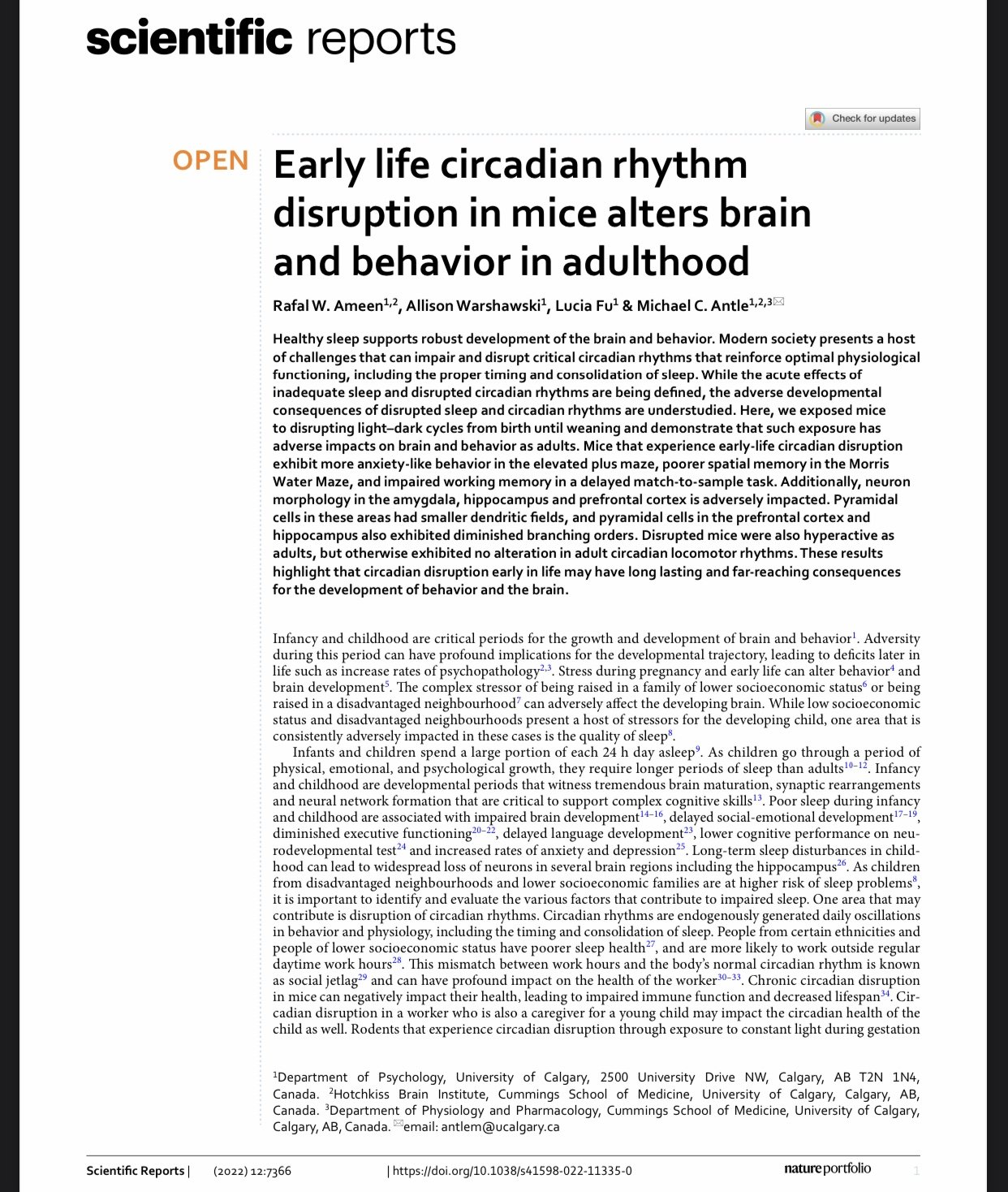
Study: Early life circadian rhythm disruption in mice alters brain and behavior in adulthood

Health begins with the light you live in. The AM light is a powerful opportunity to reset your circadian rhythms, that govern all of your body’s biological processes.

This is especially crucial during pregnancy and in the postpartum period, when development is at a sensitive stage.

Anyone can tell you it is also a stage when time flies and space just seems a perpetual chaos!

The study

Beginning on the day of birth, female mice and their litters were exposed to either a regular light-dark cycle or a disrupting light-dark cycle where dark onset was brought forward by 8 hours every second day.

Early circadian rhythm disturbances on adult spatial learning, working memory, and anxiety

The 12 mice were assessed using the Elevated Plus Maze. The disrupted animals had significantly less entries into the open arms than did the undisrupted control group. In other words, the diminished exploratory behavior is consistent with higher anxiety-like behavior in the disrupted animals.

Also, the disrupted animals spent significantly less time in the exposed arms (8.1 ± 11.0 s) compared to the controls.

The same mice were then assessed using Morris Water Maze. The disrupted animals took significantly more time to reach the platform compared to controls.

The researchers also examined neuronal complexity in the areas of the brain hippocampus, prefrontal cortex, and amygdala, respectively.

Circadian disruption during the last trimester and extending to the preschool years

The first 3 weeks postnatal in mice are comparable to a relatively wide developmental period in humans.

Postnatal days 1–10 exhibit developmental stages that correspond to the last trimester of pregnancy in humans, while brain development events in mice at postnatal days 20–21 are roughly equivalent to human brain development events observed at 2–3 years of age in children50.

This suggests that circadian disruption during the last trimester and extending to the preschool years could still have an impact on brain development. Indeed, poor sleep at 2 years of age is associated with less gray matter at 7 years of age14.

Additionally, poor sleep at 6–12 months of age17, or at 2 years of age18,19 were both predictive of delayed social-emotional development in children.

Why this is important for every mother and child

This study adds to the growing body of research we know about how circadian rhythms, including uneven sleep patterns, can affect health.

Other studies find similar effects in hyperactivity and increased anxiety.

Aside from socioeconomic status and other environmental stressors, one area that is consistently adversely impacted in these cases is the quality of sleep.

While in utero disruption led to more severe impairments in adulthood, significant deficits were still observed when circadian disruption was restricted to the postnatal period, such as was observed in the mouse study.

Infancy and childhood are critical periods for the growth and development of brain and behaviour. Adversity during this period can have profound implications for how the child develops, leading to deficits later in life such as increase rates of psychopathology.

If you are doing shift work, this could impact the circadian health of the child as well.

Sleep is a premium for any mom during pregnancy and in the precious post partum months with a newborn. Prioritising a regular, quality sleep routine is a crucial part of ensuring a healthy baby and his or her brain development, with implications far beyond just what we think we would observe.

Link to study: https://www.nature.com/articles/s41598-022-11335-0


Share if you found this study helpful.

Get in touch to make your personal health sanctuary. #morninglight #morningreset #biologicalliving #naturallight #blockbluelightatnight #circadianrhythm #sunlight