Common Sources of EMFs in Your Children’s Room (Free Guide for Parents)

“What if the safest place in your home for your child is the most harmful?”

In this guide, you will find common sources of EMFs in children’s rooms and nurseries.

I write not only what these sources are, but why some might be more harmful than others. I also share the actions you can take to reduce your children’s exposure to these man-made EMFs.

As a mother and building biologist, my aim is to remove and eliminate toxic sources completely to reduce the body burden on our children, especially during critical developmental phases.

These are changes you can make immediately. For a peace of mind and true health for your child and yourself.

To your space.

Common Sources of EMFs

You probably already know about wireless devices and that power line and cell antenna down the road.

But artificial electromagnetic fields are everywhere within your own home. These devices in the bedroom emit electromagnetic fields that could affect your child.

Your child’s optimal development depends on critical growth stages. Your child’s bedroom deserves the lowest possible EMF levels.

1.Wireless baby monitors

Baby monitors are marketed as a mama’s must-haves. These fancy gadgets let you check on your baby on your smartphone, from anywhere.

Some include features like night vision, alerts, temperature monitoring, and two-way talk. Baby monitors can be Wi-Fi, radio (no internet), audio, and app-based.

But they send audio, and sometimes video, from a transmitter near your baby to a receiver using radio signals (typically 2.4 GHz). Your baby or child is in these near radio frequency fields for 10-12 hours a day, while they are sleeping, if not longer.

Baby monitors promise “connectedness”, but you’re relying on wireless radiation to make the connection, adding to EMF pollution in your child’s room.

Eliminate artificial EMFs in your child’s bedroom: Hardwire your baby monitor instead.

2. Wireless security cameras

Like baby monitors, these emit RF fields around your children while they sleep.

Eliminate artificial EMFs in your child’s bedroom: Hardwire any security cameras.

3. Wi-Fi

Wi-Fi routers emit EMFs constantly, even if no one is using the internet.

Removing Wi-Fi in the bedroom is fundamental to creating calm and safe environment for a night’s sleep. Eliminating Wi-Fi during the day, too, is a great way to reduce your newborn’s EMF exposure.

Eliminate artificial EMFs in your child’s bedroom: Hardwire Wi-Fi. Remove the router from your bedroom.

4. Fans

The motors in the fans put out sizeable magnetic fields as well as electric fields.

Magnetic fields are how fans work. The electric current flows through the motor's coils, generating a magnetic field interacting with another magnetic field, creating a force that causes the motor's shaft to rotate. This pulls the rotor around via magnetic attraction.

Magnetic fields do drop off with increasing distance, so make sure to put as much distane as possible between the fan and where your child is sleeping.

Eliminate artificial EMFs in your child’s bedroom: Use a meter such as a Trifield that has both a gaussmeter (for magnetic fields) and an electric field meter.

5. Adjustable tables

Adjustable tables are powered by pretty strong electrical motors. They rely on a transformer in order to convert the power.

Eliminate artificial EMFs in your child’s bedroom: If you must use an adjustable table, one workaround is to cut the power to the table when you are not using it.

6. Dimmer switches

You want to control the level of lighting in your child’s room, but dimmer switches emit 10 to 50 times more EMF than regular on/off switches due to their electronic components.

By design, dimmer switches interrupt electrical current by “chopping” the electrical waveform to lower light intensity.

Some turn the light bulb circuit on and off as many as 120 times a second. This puts out high-frequency voltage transients into your home wiring that radiate into the room as well as other rooms!

Dimmer switches have been measured to put out dirty electricity even when they turned “fully on”.

Eliminate artificial EMFs in your child’s bedroom: Replace dimmer switches with standard on/off switches to eliminate a direct source of EMF pollution in your home. Avoid smart switches.

7. Bedside Clocks

Often emit low-frequency EMFs. Many clocks produce measurable magnetic or electric field radiation, as well as circadian-disrupting blue light. These are up to 20 times above recommended “safe” levels at the bed.

Some even have Wi-Fi, or Bluetooth functions built in.

Battery-powered models put out far less EMFs than plug-in digital clocks. But 100% EMF-free alarm clocks use no electricity or batteries. Only mechanical wind-up clocks are EMF-free.

Eliminate artificial EMFs in your child’s bedroom: Choose analog alarm clocks or even mechanical wind-up clocks.

8. Electrical wiring

Currents along wiring emit low-frequency EMFs, even when devices are turned off. So long as you’re in a house, to the extent of the wiring, you are likely surrounded by such EMFs.

Eliminate artificial EMFs in your child’s bedroom: Use a meter such as a Trifield that has both a gaussmeter (for magnetic fields) and an electric field meter.

9. Smart toys

You can find RF chips in all sorts of things these days, including in toys. The idea is that you can these toys with phones and also communicate with other smart toys in the product line.

Children should not be playing with phones. You don’t want smart toys next to children, especially when they sleeping, as the toys may be accidentally turned on.

Eliminate artificial EMFs in your child’s bedroom: The safest (and easiest) thing to do is to remove these toys. How do you know if you have a smart toy? Batteries are a giveaway, because RF chipped toys need them to operate.

10. Baby rockers

Like baby monitrs, these devices can come with smart features, multiple motions, and parent-friendly designs—anything to promise your child’s sweet sleep.

However, the rocking mechanism and elevated electric fields from the wiring create high levels of EMFs.

11. Cell phones

Wireless mobile devices emit high levels of EMF whether you are using them or having them plugged in and charging near baby areas.

12. Smart home devices

Do you have these? Smart appliances such as humidifiers, sound machines, night lights, voice assistants, smart thermostats, and connected baby products…

Eliminate artificial EMFs in your child’s bedroom: Hardwire devices, if you must use them in the room.

13. Laptops

Work-from-home has become normal. You might keep your laptop in the bedroom.

I only use mine with I will only use it with an ethernet cable. But even with Wi-Fi or Bluetooth turned off, I’ve measured other high EMFs.

Eliminate artificial EMFs in your child’s bedroom: Hardwire devices, if you must use them in the room.

14. Spring mattresses

Technically, spring mattresses are not emitting EMFs by themselves. However, they attract ambient magnetic fields and electric fields where you’re sleeping.

They’re especially a concern if you are very sensitive. Or if you are a child more vulnterable to the effects of EMF radiation. It is hard to quantify or have an exact number on how much radiation spring mattress can emit, due to the fluctuations in the environment. Suffice to say, given how much time we spend on a mattress, you want to take this into consideration.

15. Ethernet cables

Ethernet cables enable us to use the Internet without exposure to Wi-Fi. But even shielded cables can measure high in electric fields.

Eliminate artificial EMFs in your child’s bedroom: Keep them at least 1 or 2 feet away from your body.

More about EMFs

Congratulations on going through the list.

You can see how you do not need major renovations or expensive tools to reduce EMFs in your child’s bedroom.

By now you are becoming aware of the major types of EMFs. Here is an introduction to EMF radiation.

Measuring EMF Levels in Your Child’s Bedroom

If you want to go a step further, a Building Biologist will assess your whole space. The key areas include:

  1. Crib measurements. Measure every area of the crib at mattress level. Pay attention to the head area where your baby’s head will lie. Take multiple readings throughout the day.

  2. Changing area assessment. Measure EMF levels at your changing station, especially if it is near electrical outlets or wireless devices.

  3. Feeding locations. Where do you sit and feed for hours? Check your primary feeding areas, whether it is a nursing chair or where you sit and breastfeed, prepare milk, and/or pump breastmilk.

  4. Play area evaluation. Babies grow so fast, and they’re usually rolling and crawling by six months. I measure EMF levels to help you identity optimal areas for tummy time and play activities.


Do you want to know more? I expand on these in my ebook “The Building Biology Home: Guide to a Calm and Safe Bedroom”. You’ll learn:

  • Why building EMF-awareness habits is crucial for your children’s health

  • The science on EMFs, optimal development, and children’s critical growth stages

  • The daily routines to start now to protect against EMFs

  • Pro tips for maximum effectiveness, including EMF protection products

  • Frequently asked questions about EMFs and children

  • How-To-Guide: Use an EMF meter to measure electric fields, magnetic fields, and radiofrequency radiation in your nursery

This is your essential EMF protection guide for mothers and fathers seeking to create a safe and optimal space for their children. I’m a mother and I understand your concerns. You will not find fear-mongering or a sales pitch for gadgets.

Every tip is something you can understand and implement today. Every strategy effectively reduces exposure while helping you become a better parent during these precious early years.

What Are EMFs? 7 Things You Need to Know as a Mother

You probably hear about EMFs and its associated risks in the devices, content, and habits that we have, but what exactly does it mean? And what does it mean if you have children or are planning for a family?

In this article, you’ll learn what is EMFs and how they’re negatively affecting the health of children, in particular concerns around fertility, conception, birth and all through the crucial years of child development.

What are EMFs?

EMFs are invisible and completely beyond most people’s awareness. However, some people can actually feel them. Especially those that are manmade (non-native electromagnetic radiation).

The Electromagnetic Spectrum

The simplest way to understand how important EMFs are to our health – is by learning about the electromagnetic spectrum.

contains the entire range of all electromagnetic radiation. It also shows the field’s approximate frequency – which relates to its wavelength.

At the absolute lowest frequencies in the hertz range, we see the largest wavelengths. These are the size of several thousand miles! The lowest of frequency fields includes the Earth’s Schumann Resonance, which is also very healing for us when we are grounded in Nature to its energy.

The higher in frequency, the field gains more energy, and also reduces in wavelength. (That’s why wireless radiation is often called pulse radiation to describe its very high energy field.) In fact, at the frequency of Wi-Fi, your body is being exposed to 2.4 or 5 billion pulsations per second. Compare that to the natural Schumann Resonance, which has just 8 gentle cycles per second.

EMFs may be triggering your child’s hungries

In healthy participants and compared with no exposure, 50-minute cell phone exposure was associated with increased brain glucose metabolism in the region closest to the antenna. Link to the study: https://jamanetwork.com/journals/jama/fullarticle/645813

Light can cause breast cancer

75 studies and articles showing effects of EMFs and the initiation and promotion of breast cancer.

https://emfrefugee.blogspot.com/2019/06/emfs-and-breast-cancer.html?m=1

2008 – Austria – Cell Phone Towers and CancerA study by Austrian Dr. Gerd Oberfeld (EMFacts 2008) showed a 23-fold increase in breast cancer and a 121-fold increase in brain tumors for those who lived with 200 meters of a cell phone base station for five years or longer! http://www.verwaltung.steiermark.at/cms/ziel/21212/DE/

EMFs may be harming your chances of conception

There’s enough compelling evidence to show how higher levels of exposure can reduce sperm quality in men.

It can also increase miscarriage risk in women. Two miscarriage studies, conducted by Kaiser Permanente and funded by the National Institute of Environmental Health Sciences, are particularly interesting because they're some of the only ones to date that actually measured EMF exposure in subjects using a magnetic field monitoring device.

"We took [913 pregnant women] and asked them to wear the monitor for the duration of their pregnancy. Studies right now aren't using the meters because most of them are focusing on cancer. [But] Cancer can take 20 years to develop—you can't measure your exposure from 20 years ago, so in those cases, you just ask how much the person uses their cell phone." — eproductive epidemiologist De-Kun Li, MD, PhD, the principle investigator on both studies (one published in 2002, one published in 2017).

Singapore breast cancer statistics

What does your bedtime routine have to do with your breast cancer risk?

-

Breast cancer is the most common malignancy among women anywhere you're from. In Singapore,

Researchers looked at how short wavelength visible light in the blue region emitted from digital screens TANKS this crucial process.

also examined different levels of radiofrequency electromagnetic fields (RF-EMFs) such as cellular phones (29-40), mobile base stations(4142), Wi-Fi routers

We have shown that both the blue light and RF-EMFs generated by mobile phones are linked to the disruption of the circadian rhythm in people who use their phones at night.

women who carry mutated BRCA1 or BRCA2, or women with family history of breast cancer should avoid using their smartphones, tablets and laptops at night.

Why bother with a sleep sanctuary if any will do?

Protecting your sleep/wake cycle is paramount to prevent cancer. Melatonin, the hormone dominant at night, is your ANTI-CANCER hormone. "has been shown to produce strong anti-cancer actions and also promotes sleep."

All mice were kept in the light for 12 hours each day. One group of three mice was in the dark the other 12 hours, which helped them produce high levels of endogenous melatonin. Another group spent 12 hours in light followed by 12 hours in dim light at night, which suppresses their nocturnal melatonin production. The dim light was 0.2 lux, which is less than a night-light or a display light from a cell phone

And the number disruptive to your

Women are more sensitive to melatonin disruptions.

BOTH the blue light and RF-EMFs generated by mobile phones are linked to the disruption of the circadian rhythm in people who use their phones at night.

Your breastmilk can be changed by your light enviroment

Human breast milk is more than a meal – it’s also a clock, providing time-of-day information to infants.

https://theconversation.com/human-breast-milk-may-help-babies-tell-time-via-circadian-signals-from-mom-118492?fbclid=IwAR2kplJ4RVUugLqqc7poMbCmZGYCnZvcxwDFXzmE_URmkbTS4ExjArOIZjo

Children are especially susceptible

Children are more vulnerable than adults to the effects of EMF (electromagnetic frequencies or fields) for a number of reasons, and most are submerged in an electrosmog soup all day, every day. What are the risks?

In 2016, the National Toxicology Program released the results from the largest cell phone study ever performed on the link between nonionizing radiation and cancer. Rats exposed to the frequency of radiation emitted by cell phones developed two kinds of tumors: gliomas in the brain and schwannomas in the heart. These results align with several observational studies finding links to the same types of tumors in humans - plus acoustic neuromas and meningiomas.

  • Sleep deprivation

  • Low energy, “brain fog”, mommy brain

  • Mood issues, such as anxiety, depression, aggression and impulsivity

  • Increased stress

  • Affect sleep/wake cycles in babies through breastfeeding

  • Developmental issues (especially in young kids)

  • Dry-eye disease

  • Decreased hand-eye coordination

  • Reduced ability to form social connections and relationships

  • Reduced executive function

In 2010, Powe et al. reported that among 25 Boston-area women,  mothers of sons produced ~25% higher energy density in milk than mothers of daughters. More recently, Fujita and colleagues (2012) revealed sex-biases in the milk fat concentration among 72 women in rural Kenya. On average, mothers of sons produced significantly higher fat concentrations in milk.

Children are also sensitive to their environment

Some people are "exquisitely sensitive" to places where EMFs are present. Some literally cannot be in certain places because of the Wi-Fi there—they end up with fatigue and headaches and ringing in the ears and a sense of brain fog to the extent that it may affect thinking and speech patterns.

I had a glimpse of this as a child that worsened as a teenager until it hit a peak when I was working fulltime. It took me until I was into my 30s to understand where all these symptoms were coming from.

The thing is, at that time I had no idea what was going and kept going, kept struggling despite the bouts of malaise that would hit me. It takes time for children to learn how to express their bodily aches in calm ways for our adult ways; before then, it often manifests as temper tantrums, general fatigue and “laziness”, and spectrum-type disorders.

Brain development in children

A child’s hippocampus and hypothalamus absorb 1.6 to 3.1 more MWR than an adult’s, and his cerebellum absorbs 2.5 times more[6][7]

Resources and references:

  1. [6] Christ, Andreas, Marie-Christine Gosselin, Maria Christopoulou, Sven Kühn, and Niels Kuster. "Age-dependent Tissue-specific Exposure of Cell Phone Users." Physics in Medicine and Biology55, no. 7 (2010): 1767-783. doi:10.1088/0031-9155/55/7/001

  2. [7] Gandhi, Om P., L. Lloyd Morgan, Alvaro Augusto De Salles, Yueh-Ying Han, Ronald B. Herberman, and Devra Lee Davis. "Exposure Limits: The Underestimation of Absorbed Cell Phone Radiation, Especially in Children." Electromagnetic Biology and Medicine31, no. 1 (2011): 34-51. doi:10.3109/15368378.2011.622827.

  3. the Agency has issued opinions on the health effects of 5G deployment, high-voltage lines, body scanners and light-emitting diodes.

  4. READ MORE about the link between night time light exposure and breast cancer here ((Melaniechua.com)).

  5. https://www.ncbi.nlm.nih.gov/pmc/articles/PMC5811748/?fbclid=IwAR3nAtsjrYTSCzDy5S7ayvcRmEgs4QZNyTBkhe6qoLEgTTkAyaWC7wOue0U#!po=1.51515

  6. https://m.medicalxpress.com/news/2019-03-breast-cancer-likelier-bone-nighttime.html?fbclid=IwAR114v839lOxffTGnuuWVPfsVcMWaRf9fntJsxIi0NW7f-Shm_en3-OLE9M

Building Healthy Habits with Outdoor Play During the Early Years

Updated 10 Jan 2022

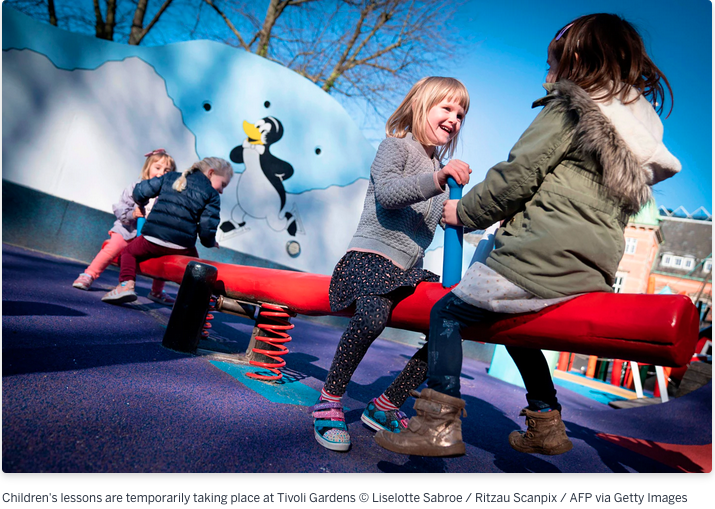
Most parents know their children do better after a good bout of play outdoors. The fresh elements, natural sensory elements, and opportunities for creative imagination are part of why we as adults appreciate and enjoy the calming aspects of nature too.

Why do we need to build habits with outdoor play?

Most of us would say our kids are spending too much time indoors (usually watching TV and playing video and computer games).  A recent study by the Kaiser Family Foundation found that the average eight to eighteen year old kid is now spending an alarming 7 hours and 38 minutes of electronic screen time per day—that is almost half their waking hours.

Often the focus is on “pre-preparation” for academics, or the training of the mind; but we ensure our children develop healthy bodies by playing outdoors. The recommendation for the preschool years is at least 1 hour of outdoor play. In Singapore, the Health Ministry and Education Ministry in 2017 said that pre-school children will get at least an hour of physical activity a day, double the current 30 minutes.

Time outdoors in natural spaces help calm the body’s sympathetic/stress responses. Researchers at the University of Illinois have determined that 30 minutes of time in a park setting will help children with attention deficit hyperactivity disorder (ADHD) to be able to concentrate in the classroom and act more calmly and with more focus at home. 

Homeschooling curriculums recognise how important getting outdoor activity is to the success of the daily rhythm of learning and playing. For example, Charlotte Mason recommends even more — 4 to 6 hours of outdoor play!

(Side note: Charlotte Mason wrote books about educating children, and her philosophy advised delaying formal education until age six, instead advocating play (a lot of it outdoors!) and work with the gentle boundaries of the family. Nature study is a very important component to a Charlotte Mason method. Mason believed children should spend as much time as possible outdoors, and had students keep detailed nature journals and used nature guides to discover and identify the natural world in their neighborhood.)

In this post, I'll share with you some ideas ideas that you can use for to build healthful habits with your little ones during outdoor play. Given the opportunity to play outdoors and have fun, children will develop meaningful connections with their natural environment and build habits into their grown-up years!

  1. Embrace the outdoors, daily

Once in Norway, and again in Finland, I heard the phrase: No bad weather, but poor clothing. Charmed by the Scandinavian attitude and the array of outdoor sports available in the worst of winters, I began to adopt this when I had my own children, and then learnt different cultures have their own variations of the same phrase.

I live where searing heat and persistent mosquitos can wear me down during the hotter seasons, and make any outdoor attempt a plain drag (if not danger for heat stroke). To work around this, we played early in the morning or snuck quick trips to the playground after the worst heat of the day was over. Outdoors is not a novelty, but part of our daily routine.

Modern research supports this. Lack of outdoor time is linked to many childhood problems, like Sensory Processing Disorder, obesity, and even ADHD.

“Never be within doors when you can rightly be out.” Charlotte Mason, Home Education, page 42

Have meals al fresco (or at a balcony). Take your chores and hobbies outside. Find any way to situate your activities outdoors, or a semi-outdoor environment.

2. Observe the patterns and cycles of Nature

Ask the child to go observe the clouds, a tree, flower, or other interesting feature. Have them come back to report what they have seen. This helps increase their vocabulary, ability to remember, and ability to recount without exaggeration.

This encourages a child to use their five senses while looking at things in nature, or objects around the house. It also sharpens their relationship to their natural environment.

3. Take time to touch and ground

If you’re wearing shoes all the time, try taking them off to feel the fresh grass. Pause to touch the soft petals of a flower, or hear the hum of a bee. These actions offer ways for your bodies to ground to the Earth and absorb its beneficial frequencies, instead of skimming past when we are outdoors.

4. Slow your rhythm to match Nature’s frequencies

Ask your children to “listen to the quiet or to any buzzes and hums you hear. At appropriate times, make space for a break to take in. If your children are a little older, ask them describe to you this landscape of calm silence. This can seem like an abstract task, but it can be enjoyable when presented as a game.

This helps a child grow awareness of the difference between feeling busy, especially if you live hectic schedules amidst city living, and feeling calm. He or she will easily connect the ways to access this, through attention to their body’s awareness.

5. Let them play

When you and your child are outside for play, don’t waste the opportunity by impeding your child’s play. This means giving them space and time to play, uninterrupted (under your watchful eye). True free play is the work that children must do to grow and develop a strong body and mind.

Sometimes this means letting your toddler climb the rings higher without saying “no, that’s dangerous”. Or gently guiding or diverting him or her without saying “you can’t do that.”

Let your five-year-old holler his heart out for a bit and hold any comment as he seems to swing a little too high. You’ll be heartened to observe, that usually, children can find their own boundaries. Your toddler will likely pause if he cannot reach a bar, and your primary school age child will choose not to climb to the top after all. Usually they find these boundaries better playing by themselves or in smaller, rather than larger, groups.

You will observe your children naturally inclined to seek these activities which stimulate the proprioceptive sense:

  • Pushing (for example against heavy instruments as the swing, merry-go-round)

  • Pulling (tug of war, or hanging from bars)

  • Squeezing (climbing small spaces, crawling under structures)

  • Climbing or lifting

  • Stretching (e.g. more climbing and taking leaps!)

They are growing their proprioception (from Latin proprius, meaning "one's own" and capio “to take or grasp”) senses, which are what helps them understand their self-movement, force, and body position. Physical activities which stimulate this sense have an organising effect on the brain.

This sets them up for more disciplined movements later whether it is sports or sitting still for fine motor tasks — such as writing.

For some parents, getting outside seems more like a chore rather than a relaxing pleasure. There are risks and potential for accidents everywhere.

The hours that we spend outside are sure to make up some of your children’s most treasured memories of childhood. By making habits to connect better to our natural environment, you are building their toolset to help regulate their well-being, and growing their awareness of the natural elements.

Explore the many ways you can bring the outdoors to your indoor spaces, and children love this. If you want to create a biologically supportive indoor space for your children, get in touch for a FREE discovery call.

Managing Your Children During a Renovation or Move: Creating Opportunities for Growth

Moving house or embarking on a major home renovation can be tiring, stressful, and messy. It is a long haul process that requires your stamina and patience, and understandably you need all the time and space to plan and prepare for a major change in you and your family’s lives.

The only constant is change. Unless it’s my house. Then do not change it.

As I have heard and witnessed many house moves and changes, a lot of the stress is caused by friction among family members and the thinking that a house transition ought to be a certain fixed process when it is an organic, dynamic process of change.

One reason children can feel disengaged and un-confident in their work is because they are not empowered to take charge of the environment that they do their work and play in. They’ve never been asked about what they want to wear or what they like or not like about sleeping in particular spaces.

They may hear their mothers and fathers discuss the practical concerns of a house (sometimes in stressed tones), but not the supportive, more emotive aspects of it.

When we involve our children in a house move or renovation, we are inviting them to experience a beautiful process — where they are with the ones they require love most and working through life questions and dreams together. This can be big or small, and any child, whether a toddler or a teenager, can appreciate and be inspired by this change in life.

If you keep your children “out of the way” during this phase, they will experience a lack of integration into the new space. They’ve lost their familiar nooks and crannies and their things have been taken and put differently.

You will face a longer period of transition with your children in the new space. How will their new routines look? Where will their stuff go? Why the new space not working the way you thought it would?

Space is human

In 1921 Fritz von Bothmer was asked by Rudolf Steiner to develop the gymnastic education at the first Waldorf School in Stuttgart. When Bothmer confessed to feeling somewhat inadequate for the task, Steiner simply advised him to ‘be happy’ in his work. That is what he did; and gradually he evolved a series of gymnastic exercises for the children.

Home changes are always learning experiences

Moving home shakes up a lot of hidden or neglected assumptions about a space. This includes the sort of materials, too, in home furnishing that we did not realise are toxic.

Mold is a common example. Dismantling furniture, stripping wallpaper or paint, can reveal moisture issues. This can cause respiratory irritation, eye irritation and wheezing, especially in children who have underlying allergies or respiratory issues like asthma.

People often rush to renovate before a new baby arrives, but pregnant women should take care not to expose a fetus to harmful fumes and dust, especially in older homes.

Take the chance to explain to children why you do not want to be inhaling or ingesting harmful dust, especially for younger siblings who are infants and toddlers and spending a lot of time crawling on the ground.

Children have the power of loving imagination

Give your child a role and tasks. Open them up to the opportunities of being a family member who is able to create a beautiful, supportive space too.

Some thoughts to prepare your children for a house move or a major home renovation: 

  1. Before you start involving your children, clarify your own intentions for your house move or renovation. This dispels any fears of your own.

  2. Show your child everyday items (furniture, kitchen utensils, toys, books) that you may want or not, and why you are keeping or letting go of them.

  3. Explain a house move or renovation as a process of making a home that supports what you want for your loved ones living in the space. This is a great way to explain gratitude and connection to a place.

  4. Plan for age-appropriate and peaceful tasks where your child can participate. It could be sorting out their books or clothes. Or imagining how they will rebuild a Lego set.

  5. Ask your child what types of projects and playtime they would love at the new space, perhaps perhaps painting and drawing, or a spot to practise their basketball throws. Children have powerful imagination that can help propel their actions. They will be ready for the tasks along the way if they create their big picture.

  6. Give them age-appropriate tasks in the new space. It could setting out their books or clothes, mopping the floor, finding their nook on the kitchen shelf for their pet plant/fermentation project. It could simply be placing their pencil case and papers neatly at their desk.

are you planning a renovation or house move, if you want help with the process, book a 1-1 session with me through this link.

Why Both Mother and Baby Need a Biological Space

Why Both Mother and Baby Need a Biological Space

Much of the focus is around the physical, mental, and emotional changes and challenges mothers can expect, and the whole development of the baby to look forward to. Less attention is paid to the factors in our personal spaces that can help or impede the desires and goals we have for a healthy mother and child, as well as the sort of nurturing spaces we want to set up for optimal heallth.

Read More

Return to Schools: 9 Big Questions Parents Should Ask in A Pandemic

Return to Schools: 9 Big Questions Parents Should Ask in A Pandemic

If you are considering whether to send your child to school again, familiarise yourself with the environmental elements that affect biology and learn about electromagnetic safety. Then, take time to consider each element in your child’s school to determine whether or not it is a healthy environment.

Here are some ideas that I will be considering for a happy return to schooling – and a biologically safe and supportive one:

Read More