Bioelectricity guides the growth of embryos
/
Researchers found how the embryo is molded by bioelectrical signals, particularly ones that emanate from the young brain long before it is even a functional organ.
Read MoreResearchers found how the embryo is molded by bioelectrical signals, particularly ones that emanate from the young brain long before it is even a functional organ.
Read MoreA calm EMF environment lays the groundwork for health conception and pregnancy. All of our biological systems are electrical. Our hearts and brains are regulated by internal bioelectrical signals, for example. Any environmental exposure to artificial EMFs can interact with fundamental biological processes in the human body. Eliminating artificial EMFs is top priority before, during, and after pregnancy as the baby develops.
This is especially important as pregnancy and birth is also a mental game.
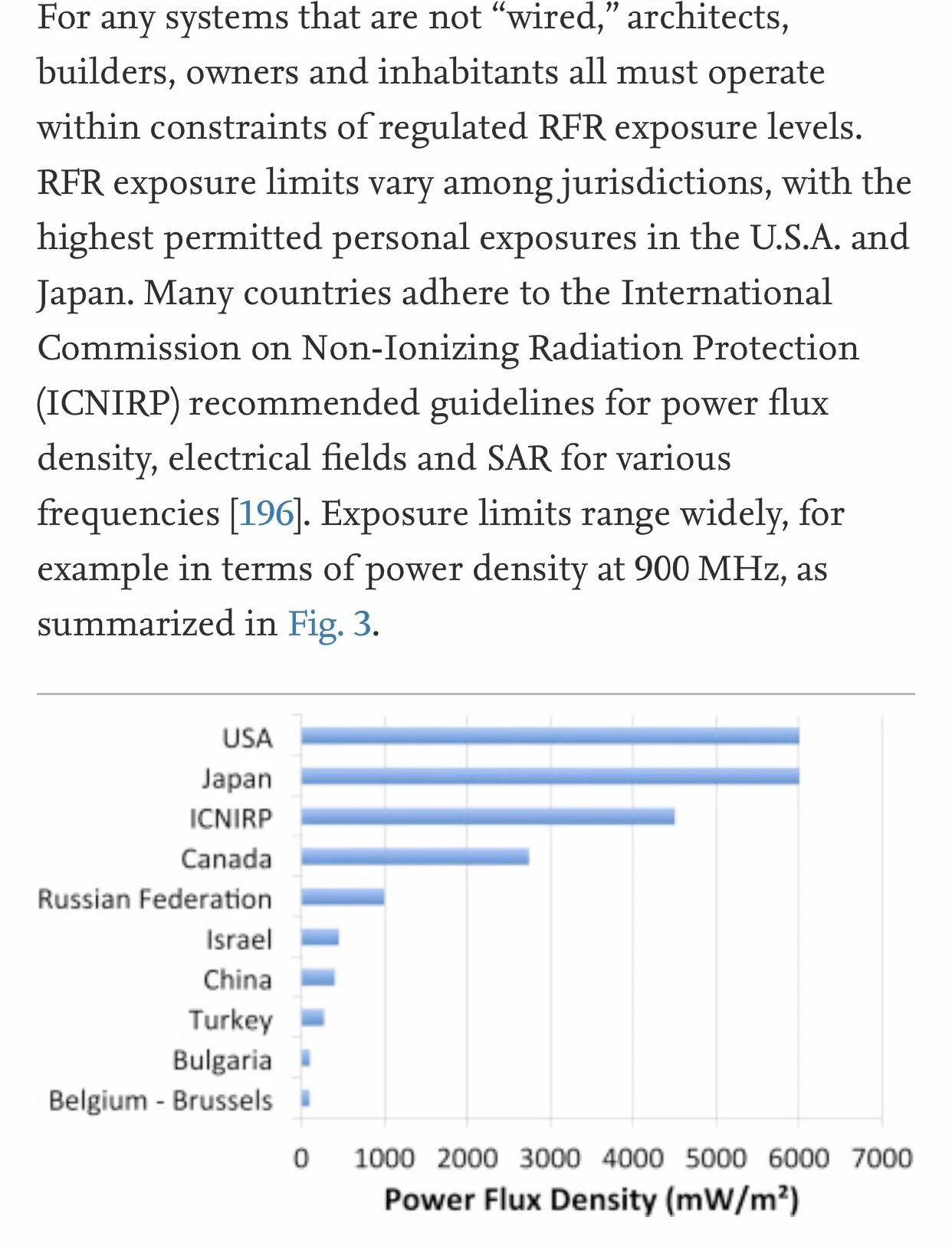
Read MoreThis paper examines key reasons as to why action should be taken include potential liability risks when technology is not implemented safely. International measures and guidelines for lower RFR exposure are highlighted. Practices are outlined and recommendations made to minimize the impact of RFR on public and environmental health in the design, construction and maintenance of safer, modern buildings.
Read MoreTo share about the elements of a biological home environment, I decided to revisit my own birth experience to reflect on the practical approaches that work. I myself have learnt a lot between my first and last pregnancies, and so in this article, I focus on the simple things that can make the difference for families already busy with little ones.
Essential to preparing for the arrival of a child is the home environment – a supportive, comfortable space rooted in the love and commitment for your little one. Biological principles and lifestyle choices are at the heart of preparing your nest, like any renovation or interior design project.
Read MoreMuch of the focus is around the physical, mental, and emotional changes and challenges mothers can expect, and the whole development of the baby to look forward to. Less attention is paid to the factors in our personal spaces that can help or impede the desires and goals we have for a healthy mother and child, as well as the sort of nurturing spaces we want to set up for optimal heallth.
Read MoreThis is the first study in a live mammal to show that the placenta does not block such particles.
The rat foetuses exposed to the particles put on significantly less weight towards the end of gestation. The 20 nanometre beads used were made of polystyrene, which is one of the top five plastics found in the environment.
Twenty four hours after exposure, the weight of the foetuses was an average of 7% lower than in control animals, and placental weights were 8% lower. Weight loss was also seen in other experiments using titanium dioxide particles. The rats were exposed to the plastic nanoparticles on day 19 of gestation, two days ahead of the usual time for birth and when the foetus is gaining the most weight.
The nanoparticles used in the research were a million times smaller than the microplastics found in human placentas, and therefore currently much more challenging to identify in human studies.
A separate experiment showed that the nanoparticles crossed the placenta about 90 minutes after the mothers were exposed. Researchers warn there is an urgent need to assess the issue, particularly for developing foetuses and babies, as plastics can carry chemicals that could cause long-term damage.
“We know nanoparticles have greater toxicity than the microparticles of the same chemical, as smaller particles get deeper into the lungs (…) We found the plastic nanoparticles everywhere we looked – in the maternal tissues, in the placenta and in the foetal tissues. We found them in the foetal heart, brain, lungs, liver and kidney.”
— Prof Phoebe Stapleton, at Rutgers University
See the details of the study: https://particleandfibretoxicology.biomedcentral.com/articles/10.1186/s12989-020-00385-9
Join my free monthly newsletter, Melanie’s Building Biology Home, where I share fundamental-principles, evidence-based advice for your home and wellbeing: